

About the Wisconsin Supreme Court
The Wisconsin Supreme Court is the state’s highest court and consists of seven justices elected to 10-year terms in nonpartisan elections. The court may hear appeals from lower courts and original cases. Recently, the court has issued decisions upholding abortion rights, striking down district maps it held were gerrymandered, and restricting legislative vetoes. In the coming term, the court could hear major new cases about collective bargaining, election laws, and congressional districts.
Current Justices

Jill J. Karofsky
Chief Justice Jill J. Karofsky was elected to the Supreme Court in 2020, having previously been a judge on the Dane County Circuit Court. Before becoming a judge, Karofsky was executive director of the Office of Crime Victim Services for the state Department of Justice, an assistant state attorney general, and Wisconsin’s first Violence Against Women Resource Prosecutor.

Annette Kingsland Ziegler
Justice Annette Kingsland Ziegler was first elected to the Supreme Court in 2007 and served as chief justice from 2021 to 2025. Ziegler began her legal career in private practice and went on to serve as an assistant United States attorney for the Eastern District of Wisconsin and a Washington County Circuit Court judge.

Rebecca Grassl Bradley
Justice Rebecca Grassl Bradley was appointed to the Supreme Court by former Gov. Scott Walker in 2015 and was elected to the court the following year. Before her appointment, she served as a Court of Appeals judge and a Milwaukee County Circuit Court judge. Bradley is not seeking reelection to the Supreme Court, and her term will end on July 31, 2026.

Rebecca Frank Dallet
Justice Rebecca Frank Dallet was elected to the Supreme Court in 2018, after serving as a Milwaukee County Circuit Court judge. Dallet previously was an associate dean of the Wisconsin Judicial College, an adjunct professor at Marquette University Law School, a Milwaukee County assistant district attorney, and a Special Assistant United States Attorney for the Eastern District of Wisconsin.

Brian Hagedorn
Elected to the Supreme Court in 2019, Justice Brian Hagedorn has served on the Wisconsin Court of Appeals and was former Gov. Scott Walker’s chief legal counsel for nearly five years. He has also served as an assistant attorney general at the Wisconsin Department of Justice, a law clerk to Wisconsin Supreme Court Justice Michael Gableman, and a private practice attorney.
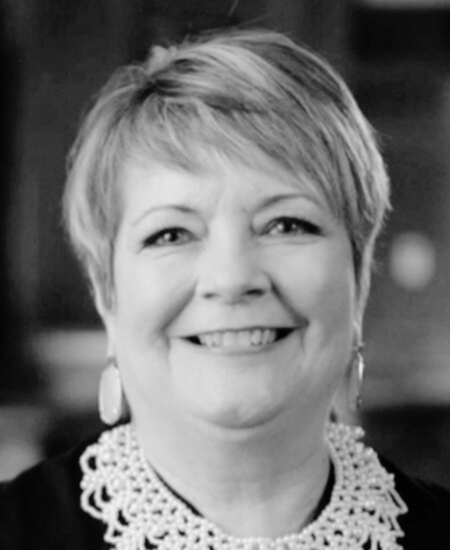
Janet Protasiewicz
Justice Janet C. Protasiewicz was elected as a Supreme Court justice in 2023 after serving as a Milwaukee County Circuit Court judge. She previously worked for 25 years at the Milwaukee County District Attorney’s Office and has taught at the National Advocacy Center in Columbia, S.C.

Susan Crawford
Justice Susan M. Crawford was elected to the Supreme Court in 2025, having previously served as a judge in the Dane County Circuit Court. Before her judicial career, she was a civil litigator in private practice, chief legal counsel for former Gov. Jim Doyle, and an assistant attorney general at the Wisconsin Department of Justice, where she directed the criminal appeals unit.
The Court’s Key Decisions
Liberal


Conservative



Kaul V. Urmanski
ISSUE
Does an 1849 law banning most abortions in Wisconsin still apply today?
FACTS
- At the time the case was filed, Wisconsin had a 1849 law on the books that classified almost all forms of abortion as a felony. Although Roe v. Wade nullified the law in 1973, it was never officially repealed.
- After the U.S. Supreme Court’s Dobbs v. Jackson decision in 2022 to return the question of abortion rights to the states, Sheboygan County District Attorney Joel Urmanski and Wisconsin conservatives argued that the law should still apply.
- Attorney General Josh Kaul asked the Wisconsin Supreme Court to rule on whether the 1849 law still prohibited abortion in the state.
DECISION
The Supreme Court held that subsequent legislation regulating abortion in Wisconsin impliedly repealed the 1849 law. Therefore, it no longer applies and cannot be used as a justification for banning abortion in Wisconsin.
IMPACT
Abortion remains legal in Wisconsin.
*Justice Ann Walsh Bradley no longer serves on the Wisconsin Supreme Court
Liberal
Conservative
Clarke v. Wisconsin Elections Commission
ISSUE
Are Wisconsin’s legislative districts constitutional?
FACTS
- In 2021, the Republican majority in the state legislature passed new congressional and state legislative district maps that were criticized by a nonpartisan Princeton University study for being heavily gerrymandered and including noncontiguous districts.
- While Democrats argued for a panel of federal judges to draw compromise maps, Republicans appealed to the Wisconsin Supreme Court, where conservatives held a 4-3 majority. After Justice Brian Hagedorn broke with the conservative majority and ruled against the gerrymandered maps, Republican lawmakers appealed to the U.S. Supreme Court.
- In an unsigned decision, the U.S. Supreme Court struck down the Wisconsin Supreme Court’s ruling and criticized the process it used to reach it, saying, “We agree that the court committed legal error in its application of decisions of this Court regarding the relationship between the constitutional guarantee of equal protection and the VRA.” With the case back in the jurisdiction of the Wisconsin Supreme Court, Justice Hagedorn changed his vote, ruling in favor of the Republican-drawn maps and allowing the gerrymandered districts to remain.
- In 2023, when the Wisconsin Supreme Court’s balance shifted to a liberal majority, a new challenge to the 2022 maps was filed by Wisconsin voters, the governor, and several state senators.
DECISION
In the 2023 decision, the majority ruled that the Republican-drawn maps violated the state constitution’s requirement that districts be contiguous and were therefore unconstitutional. The court ordered the state legislature and the governor to draw new voting districts ahead of the 2024 elections. The Wisconsin Supreme Court stopped short of declaring the 2022 elections unlawful and did not require special elections.
IMPACT
After the court ruled that the legislature’s first attempt at drawing new districts violated the state constitution, the legislature adopted maps submitted by the governor. Those maps took effect in 2024.
*Justice Ann Walsh Bradley no longer serves on the Wisconsin Supreme Court
Liberal
Conservative
Evers v. Marklein
ISSUE
Can a legislative committee block administrative rules?
FACTS
- Prior to this decision, the Wisconsin State Legislature held significant authority in overseeing the executive branch. This afforded legislative committees, which typically consist of a small number of legislators, significant power in reviewing actions taken by state agencies and the governor’s administration.
- Under a divided government, Republicans in the legislature unilaterally overrode the executive branch (e.g.rejecting funding decisions made by the Department of Natural Resources).
- In 2023, Governor Evers asked the Wisconsin Supreme Court to take up the issue of the separation of powers between the legislative and executive branches. The Court ruled that legislative committees did not have the power to individually veto expenditures by the Department of Natural Resources from funds that had already been allocated to the department.
- In 2024, the Supreme Court revisited the issue, ruling more broadly on legislative committees’ authority to block administrative rules without passing a bill through the full Wisconsin House and Senate.
DECISION
In both the 2023 and 2024 decisions, the Supreme Court limited the power of the legislature on the grounds of separation of powers. The 2024 decision, the broader of the two, provided state agencies’ authority to make rules under existing statutes without the threat of veto by legislative committees.
IMPACT
Legislative committees no longer have the power to unilaterally veto executive branch rules.
*Justice Ann Walsh Bradley no longer serves on the Wisconsin Supreme Court
Why Does the Supreme Court Matter?
The Supreme Court is composed of seven justices, elected to 10-year terms in statewide, non-partisan April elections. Vacancies are filled by gubernatorial appointment and the appointee is required to stand for election to a full 10-year term during the next spring election that another justice isn’t already on the ballot. The Wisconsin Constitution limits justices to running one at a time.